Shockwave Therapy for Chronic Pain &
Injury Recovery
Relieve Pain – Stimulate Healing – Restore Function
If you’re struggling with chronic tendon pain, soft tissue injury, or conditions that haven’t responded well to traditional treatments, Shockwave Therapy offers a powerful, non-invasive solution. Our clinic brings this advanced modality to help you recover faster, reduce pain, and return to your active life.
What is Shockwave Therapy?
Shockwave Therapy (also called Extracorporeal Shockwave Therapy, Radial Shockwave Therapy, or ESWT) delivers high-energy acoustic pulses into injured tissues. These pulses induce controlled microtrauma, stimulate blood flow, increase growth factors, and trigger a healing cascade in soft tissues, tendons, and joints.
When your body has “forgotten” how to heal a chronic injury, Shockwave prompts a renewed inflammatory / repair response.
How It Works: Mechanism & Science
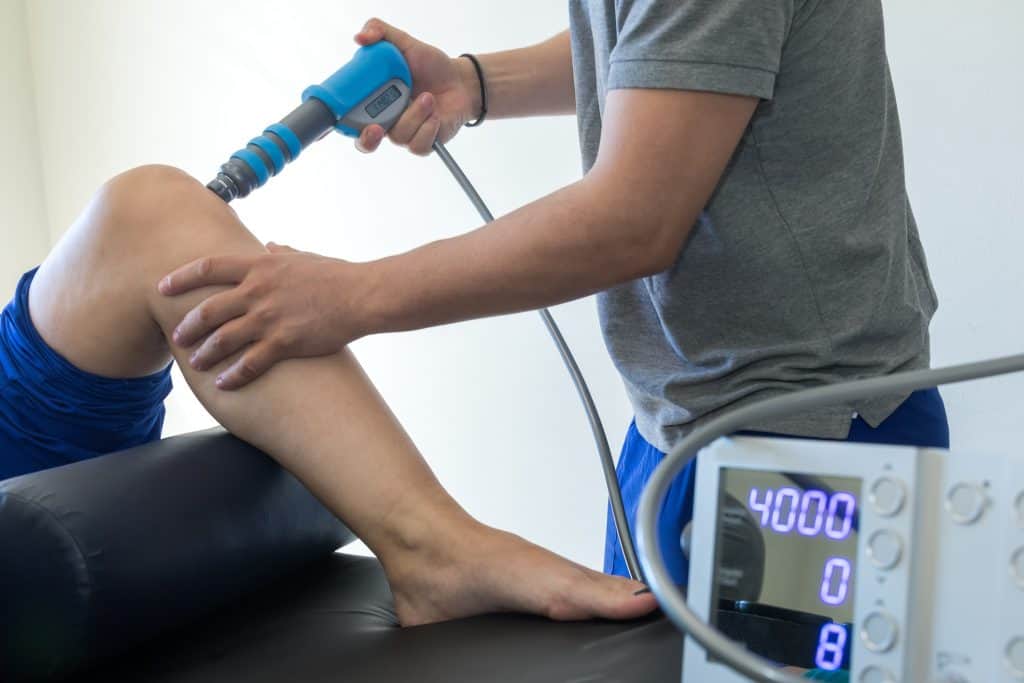
The shockwaves are applied using a handheld applicator over the target zone (with gel coupling)
Energy pulses penetrate through soft tissue layers
Microtrauma + mechanotransduction signals stimulate fibroblast activity, neovascularization, and collagen remodeling
Over a series of sessions (typically 3-6), tissue quality improves, pain diminishes, and function returns
Clinical studies report up to 84% success for calcific tendonitis, 91% improvement in tennis elbow, and 77-100% improvement in plantar fasciitis in many cases. products.shockwavecenters.com
Conditions We Commonly Treat with Shockwave
Shockwave is effective for a wide array of chronic musculoskeletal and soft tissue ailments, including:
- Plantar fasciitis / heel pain
- Achilles tendinopathy
- Patellar tendinopathy (“jumper’s knee”)
- Rotator cuff / shoulder pain / calcific tendonitis
- Lateral epicondylitis (tennis elbow)
- Hamstring injuries
- Chronic tendon injuries (elbow, wrist, hip)
- Myofascial trigger points / “knots”
- Bursitis
- Other recalcitrant joint / tendon injuries
If you have chronic pain or a “stubborn” injury that hasn’t improved, Shockwave may be a powerful adjunctive option.
Benefits & Advantages Over Other Modalities
- Non-invasive (no incisions, no injections)
- Minimal downtime, relatively quick procedure sessions
- Often faster results compared to prolonged PT / manual therapy alone
- Can reduce need for surgery or injections
- Fewer side effects when performed by trained clinicians
- Stimulates your own healing mechanisms (rather than just masking symptoms)
Be honest: some discomfort during the application is normal, but your provider modulates intensity to patient tolerance. Post treatment soreness (like after a workout) is common.
Conditions We Commonly Treat with Shockwave
01
Consult / Evaluation
Comprehensive assessment to confirm the diagnosis, imaging review (if available), motion / strength tests.
02
Treatment Session
– Application of ultrasound gel
– Deliver shockwave pulses via handheld applicator in slow, sweeping motion
– Duration per site: ~5 to 10 minutes (varies by condition)
– You may feel mild discomfort or tingling; communicate, and your provider adjusts settings
03
Post-Treatment Recovery
– Some soreness or achiness (akin to after exercise) for 24–48 hrs
– Avoid aggressive stretching / stress to the area immediately
– Gentle movement / controlled loading encouraged
– Often scheduled 1 session per week (or every 3–7 days) for 3–6 total sessions
04
Reassessment & Integration
– Track improvement in pain, function, strength, mobility
– Combine with complementary therapies (manual therapy, rehab, strength work)
– Adjust plan based on response
Who Is a Good Candidate / Contraindications
Good candidates:
- Chronic tendon or soft tissue injuries > 3 months
- People who have not responded well to standard PT, injections, or modalities
- Those seeking non-surgical alternatives
Contraindications / precautions:
- Over open growth plates in children
- Active infection or tumor in the area
- Recent fracture / untreated bone pathology
- Pacemaker / internal device near treatment area (depending on device)
- Pregnancy (in zones near fetus)
- Blood clotting disorders, local bleeding disorders
- Corticosteroid injection in the area within recent months
Evidence & Clinical Outcomes
Shockwave therapy has been studied extensively over the last 20+ years, including randomized controlled trials, meta-analyses, and case series. Some highlights:
Strong evidence basis in plantar fasciitis, Achilles, rotator cuff, and other tendinopathies
Frequently Asked Questions
Does it hurt?
Some patients feel mild discomfort or tingling during treatment; our providers modulate intensity to your tolerance. Post-treatment soreness (similar to after a workout) is normal.
How many sessions will I need?
Most patients benefit from 3–6 sessions spaced about 1 week apart, though exact count depends on severity, body region, and response.
When will I feel improvements?
Many people notice reductions in pain or increased mobility within 1–3 sessions; optimal results often manifest by the final or subsequent weeks.
Is it safe?
Yes, when delivered by qualified clinicians following protocols, Shockwave is considered low-risk. Contraindications are screened.
Does insurance cover it?
Coverage varies. In many cases, Shockwave is considered “out-of-network” or elective. Our team can provide superbills or documentation to submit for reimbursement where applicable.
Don’t let chronic pain limit your life any longer. Schedule a Shockwave Assessment now, and let our team evaluate whether this advanced therapy can accelerate your healing journey.